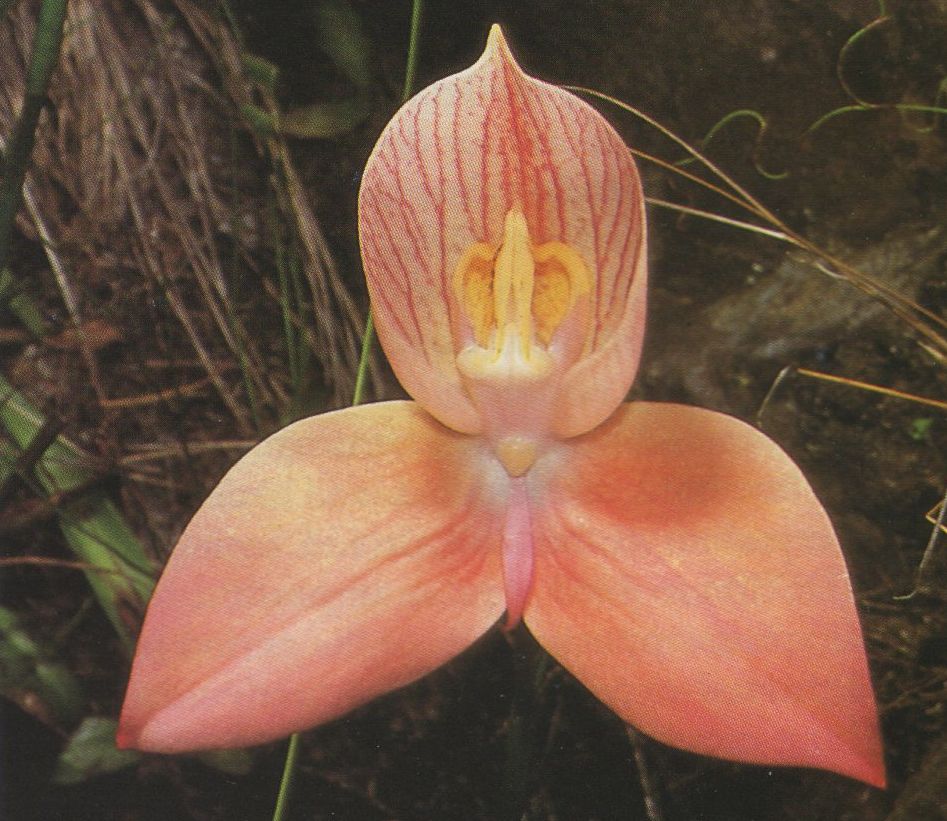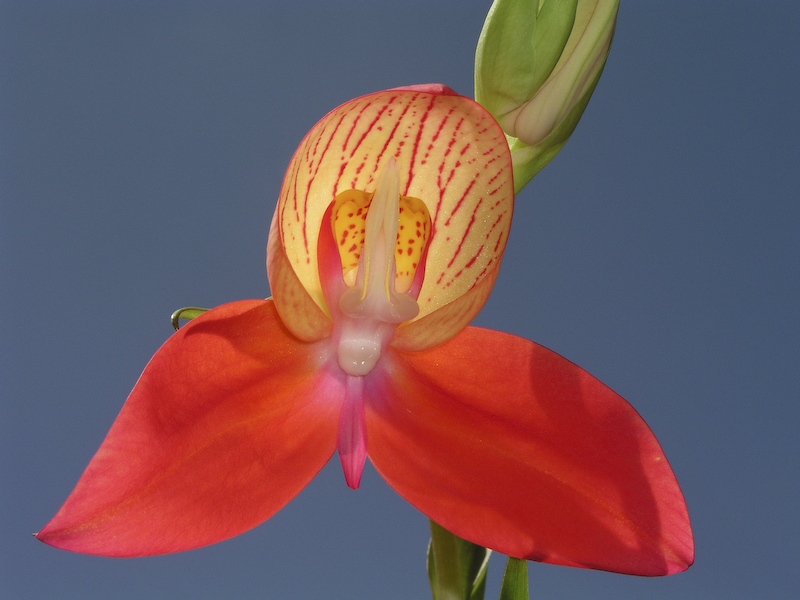
!Disa uniflora P.J. Bergius 1767 SECTION Disa Linder
Photo by © Stefan Paeffgen
Photo by Karsten Wodrich
Photo by © Eric Hunt
Photo by Carl Withner
Photos by © Eric Hunt
Yellow Orange Color form Color Form
Photos by © Louis Vogelpoel


 to
to 

Common Name The Single Flowered Disa
Flower Size to 4" [8 to 12 cm]
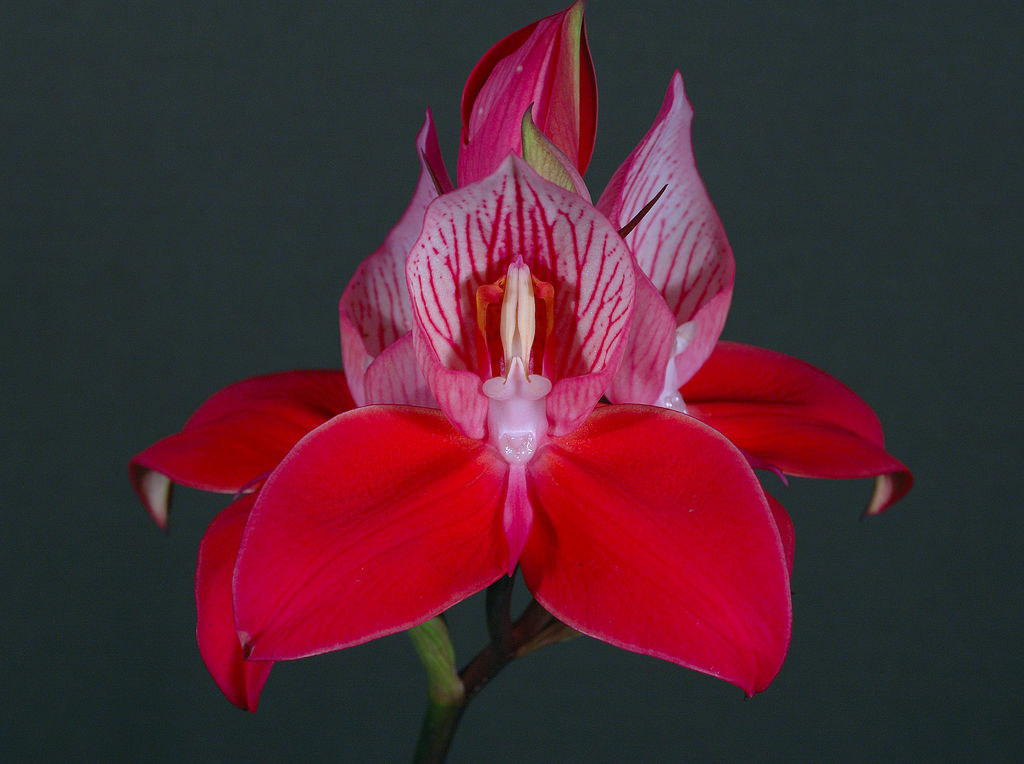
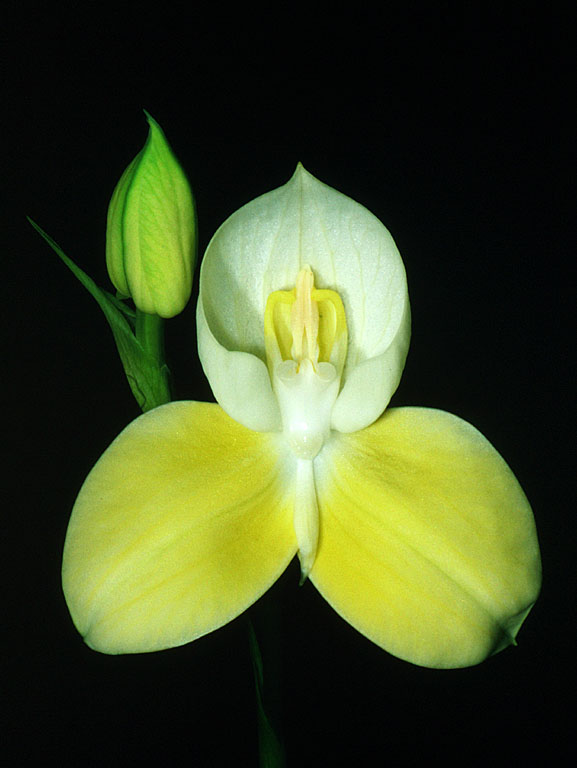
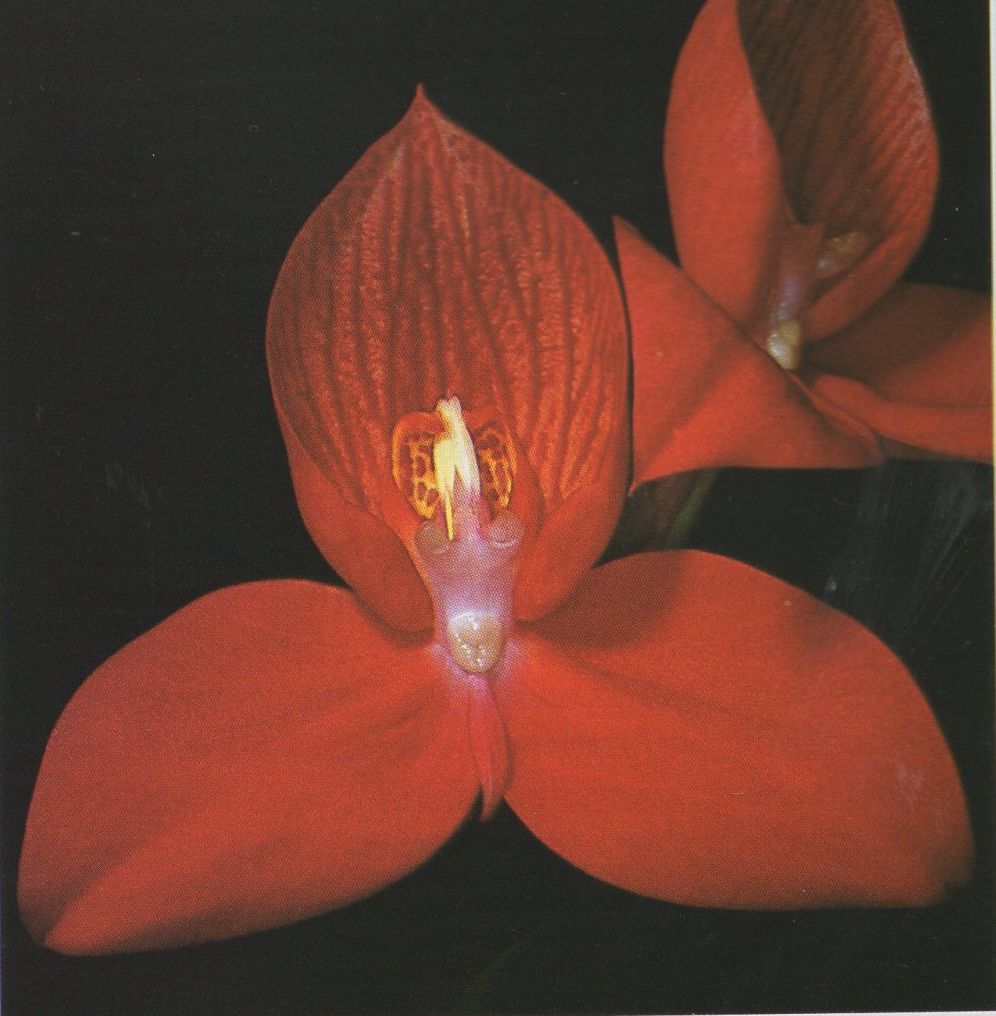
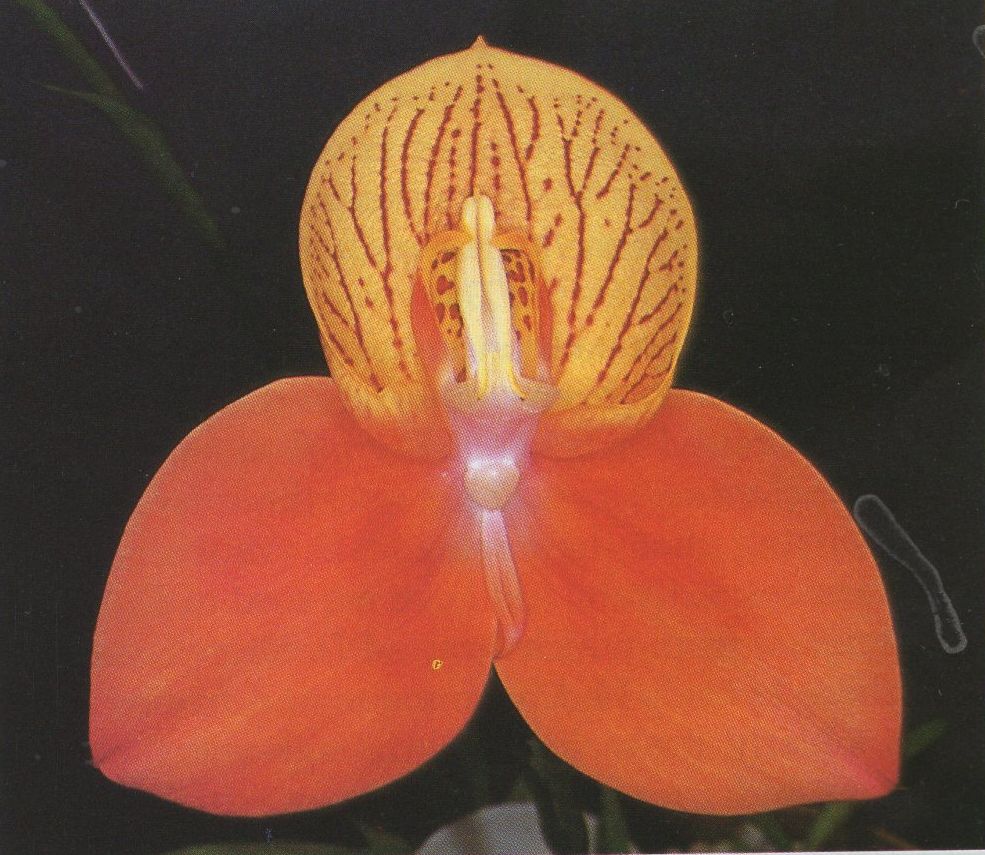
Found on Table Mountain in South Africa at elevations of 100 to 1200 meters near permanent, fast moving water along streams, rock crevasses, seepage areas and waterfalls, this small to medium sized, cool to cold growing terrestrial orchid has stout leafy stems with lanceolate to elongate-lanceolate, acute, spreading leaves and blooms in the fall through spring on a 3 to 8" [20 to 30 cm]long, raceme with lanceolate, acuminate bracts and 1 to 3 flowers, occasionally more, occuring through the summer and is found growing up through cracks in the sandstone that have standing water for the summer months. Best grown with cold to cool temperatures, potted in sphagnum and coarse river sand with great drainage, heavy air movement, high humidity and semi-shade year round will ensure a healthy plant.
Synonyms Disa barelli hort. ex Puydt 1880; Disa grandiflora L. f. 1782; Satyrium grandiflorum Thunb. 1794
References W3 Tropicos, Kew Monocot list , IPNI ; Bonplandia Rchb.f 1855 as D grandiflora; Die Orchideen Schlechter 1915; Atlas des Orchidees Cultivees Constantin 1920 drawing good; AOS Bulletin Vol 27 No 10 1958 photo/drawing fide; AOS Bulletin VOl 30 No 5 1961 photo fide; AOS Bulletin Vol 32 No 10 1963 photo fide; Encyclopedia of Cultivated Orchids Hawkes 1965 drawing fide; AOS Bulletin Vol 35 No 5 1966 photo FIDE; AOS Bulletin Vol 38 #2 1969 photo fide; Die Orchideen 3 Auflage Bd 1 Sonderabdruck aus Schlechter Lieferung 5 257- 320 Brieger, Maatsch and Senghas 1974; AOS Bulletin Vol 48 No 2 1979 photo fide; AOS Bulletin Vol 48 No 9 1979 photo fide; AOS Bulletin Vol 49 NO 1 1980 photo fide; AOS Bulletin Vol 49 NO 1 1980 as yellow form photo fide; AOS Bulletin Vol 49 No 6 1980 photo fide; AOS Bulletin Vol 49 No 9 1980 photo fide; AOS Bulletin Vol 50 No 10 1980 photo fide; AOS Bulletin Vol 51 #9 1982 postage stamp fide; Wild Orchids of Southern Africa Stewart, Linder, Schelpe & Hall 1982 photo fide; AOS Bulletin Vol 52 No 7 1983 drawing/photo fide; AOS Bulletin Vol 54 No 3 1985 photo fide; AOS Bulletin Vol 56 No 6 1987 as D grandiflora postage stamp fide; Schlechteriana Vol 2 No 2 1991 photo fide; The Manual Of Cultivated Orchid Species Bechtel, Cribb & Laurent 1992 photo fide; Orchid Digest Vol 57 No 2 1993 photo fide; African Orchids in the Wild and Cultivation La Croix 1997 photo fide; Orchids of Southern Africa Linder & Kurzweil 1999 drawing/photo fide; Orchid Digest Vol 64 #3 2000 Photo Fide; AOS Bulletin Vol 69 No 7 2000 photo fide; Orchid Digest Vol 65 #2 2001 photo fide; Genera Orchidacearum Vol 2 Part One Pridgeon, Cribb, Chase and Rasmussen 2001 photo fide; AOS Bulletin Vol 71 No 9 2002 Drawing fide; Orchid Digest Vol 66 #2 2002 photo fide; AOS Bulletin Vol 72 No 4 2003 photo fide; AOS Bulletin Vol 73 No 12 2004 drawing fide; AOS Bulletin Vol 75 No 5 2006 drawing fide; AOS Bulletin Vol 75 No 7 2006 photo fide; A molecular phylogeny for the large African orchid genus Disa Bytebier 2006; AOS Bulletin Vol 76 No 7 2007 photo fide; Australian Orchid Review Vol 72 No 4 2007 photo; AOS Bulletin Vol 77 No 8 2008 photo/drawing fide; AOS Bulletin Vol 80 #6 2011 photo fide; AOS Bulletin Vol 80 #10 2011 photo fide; Orchideen Series C Band 74 Thiv & Worz 2012 photo fide; Orchid Digest Vol 77 #3 2013 drawing/photo fide; Orchid Digest Vol 77 #3 2013 as D uniflora var alba photo fide; Orchid Digest Vol 78 #1 2014 photo fide; AOS Bulletin Vol 84 #5 2015 drawing fide; AOS Bulletin Vol 84 #5 2015 as D grandiflora drawing fide; Orchid Digest Vol 83 #2 2019 photo fide; AOS Bulletin Vol 88 #5 2019 photo fide; AOS Bulletin Vol 88 #10 2019 photo fide;
--------------------------------------------------------------------------------------------------------------------------